
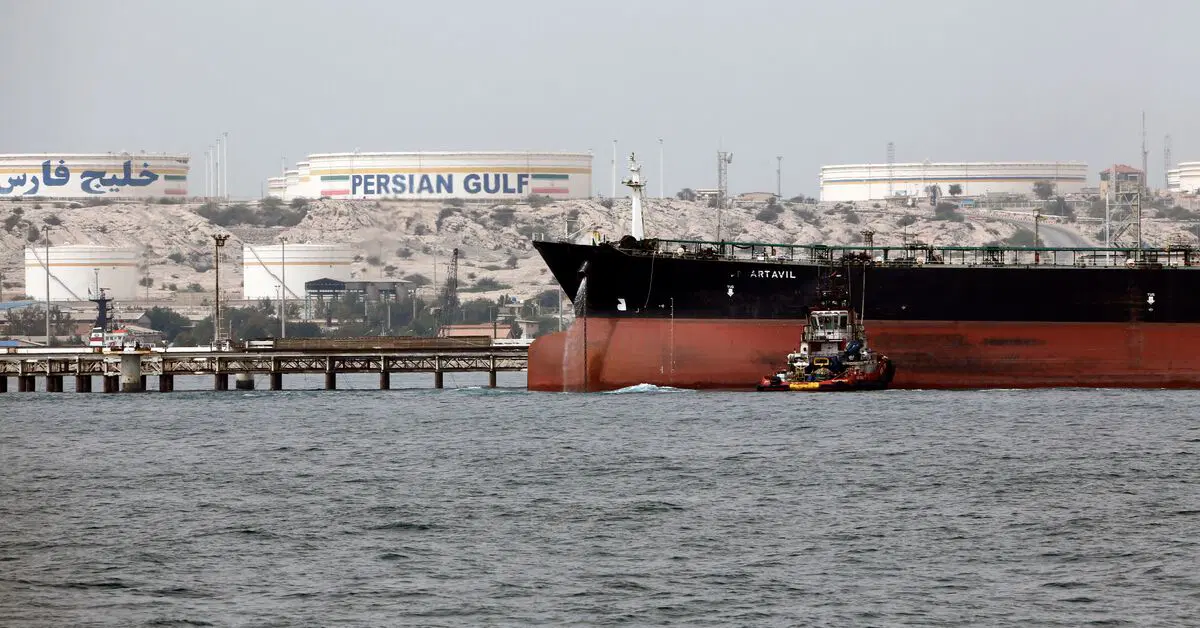

The United States canceled a temporary sanctions waiver for Iranian oil on Tuesday following targeted strikes on three tankers in the Strait of Hormuz. The sudden policy reversal significantly intensifies economic pressure on Tehran amid delicate, ongoing negotiations with Washington aimed at concluding the regional conflict.
The US Treasury Department formally terminated a special operating license introduced in June, which had permitted Iran to extract, market, and transport crude oil and associated petroleum products through August 21.
“Iran’s actions in the Strait were wholly unacceptable to the United States and will be met with consequences,” a US official told AFP.
The official, who requested anonymity, stressed that the overarching US-Iran memorandum of understanding remains strictly performance-based. They cautioned that Tehran would only unlock economic incentives by demonstrating cooperative behavior, though they confirmed that American negotiators are still working in good faith toward a permanent resolution.
According to the United Kingdom Maritime Trade Operations security agency, an unidentified projectile struck a commercial tanker overnight, sparking an onboard fire. Two subsequent vessels were hit shortly after, with at least one attack confirmed as a drone strike.
All three incidents occurred near the coast of Oman. The attacks follow Muscat’s recent proposal to establish a temporary transit corridor hugging Omani territorial waters—a strategic alternative heavily opposed by Iran, which has been attempting to implement transit fees on ships utilizing the narrow passage.
Qatar confirmed that one of the targeted vessels was its liquefied natural gas carrier, the Al-Rekayyat. Attributing the strike directly to Iran, Doha condemned the incident as an unacceptable assault on global maritime navigation. Qatari authorities subsequently summoned Iran’s deputy ambassador to register an official protest, demanding an immediate explanation and an end to actions threatening regional stability.
“We hold Iran fully legally responsible for this attack and for any resulting damages or repercussions,” Qatar’s foreign ministry spokesman Majed Al Ansari wrote on X.
Iran expressed deep dissatisfaction with Doha’s public stance, issuing a statement via its state news agency, IRNA, rejecting the allegations as unacceptable.
The maritime strikes disrupted over a week of relative stability in the region, renewing global anxieties over international shipping rights. The incidents occurred shortly after Iran had relaxed its blockade of the shipping lane under a fragile, temporary armistice reached with the United States. Following the news, global crude prices surged by more than two percent as energy markets reacted to potential supply disruptions and questioned the long-term stability of the US-Iran diplomatic framework.
“We are now in a sensitive period where potential alternatives to an Iranian toll or fee system are being explored,” Andreas Krieg, a security expert at King’s College London, told AFP. “Iran is sending a clear signal that no alternative will be accepted.”
Krieg observed that the drone and projectile strikes appeared designed to penalize commercial ships attempting to bypass Iranian oversight via the proposed Omani corridor. He characterized the actions as a direct breach of international maritime law and the standing ceasefire conditions.
Commercial shipping had only recently begun to resume standard operations across the strait after Washington and Tehran formalized their initial memorandum. However, Iranian officials have consistently maintained that the waterway will not return to its historical status, where international vessels enjoyed unrestricted transit without oversight or compliance fees.
Under the provisions of the 14-point memorandum of understanding, Iran and Oman—the two nations flanking the strategic chokepoint—are required to engage in bilateral discussions alongside neighboring Gulf states to establish a updated administrative and maritime services framework for the waterway.
Qatar had initially declined to participate in mediation efforts while under direct threat during Iran’s extensive aerial campaigns against Gulf nations. However, Doha has recently assumed a more prominent diplomatic role, hosting the latest round of indirect talks between US and Iranian representatives last week.